

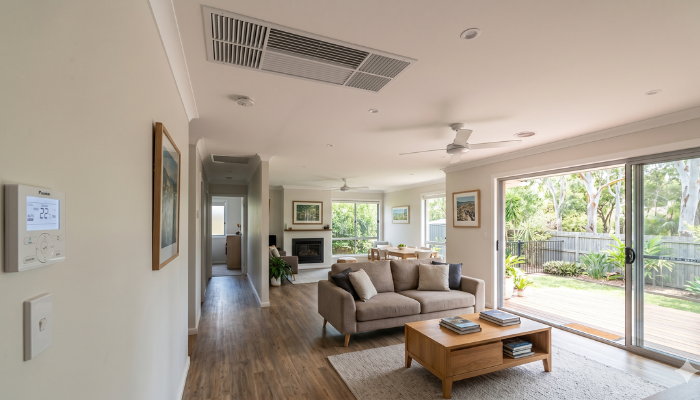
A split system is much cheaper to buy and install than a ducted system, but it only cools and heats the room it is fitted in. A single split system costs roughly $1,300 to $3,500 installed for one room, while a ducted reverse cycle system costs about $10,000 to $18,000 to condition a whole home. At QuickAir, we have installed and serviced heating and cooling in more than 20,000 Australian homes across every capital city, and the right choice almost always comes down to how many rooms you need to cover and how you plan to use the system.
The headline number can be misleading on its own. A split system looks far cheaper until you need one in every room, at which point several units start to close the gap on a single ducted system. Ducted costs more upfront and more to run, but it heats and cools the entire house from one hidden unit and tends to add resale value. This guide breaks down the real cost of each, upfront and over time, so you can compare like for like.
Split system vs ducted air conditioning: costs at a glance
The table below sums up the main cost differences between the two systems for a typical Australian home. The figures are installed prices in Australian dollars, covering the unit and labour.
| Cost factor | Split system | Ducted reverse cycle |
| Upfront cost (one room) | $1,300 to $3,500 installed | Not applicable |
| Upfront cost (whole home) | $4,200 to $9,500 for several units | $10,000 to $18,000 for one system |
| Running cost per year | $600 to $1,000 | $800 to $1,400 |
| Typical lifespan | 10 to 15 years | 15 to 20 years |
| Coverage | The rooms with a unit fitted | Every room, from one system |
| Best suited to | Single rooms, renters, smaller homes | Larger homes wanting whole-home comfort |
Read on for what sits behind each of these numbers.
How much does a split system cost?
A single split system, meaning one indoor head paired with one outdoor unit, typically costs $1,300 to $3,500 installed for a common living area or bedroom. Larger, high-capacity units for big open-plan spaces can reach around $5,000. This is the cheapest way to add proper refrigerated cooling and heating to a home, which is why the split system is the most popular choice for the rooms Australians actually live in.
If you need to cover more than one room, you have two options.
- Separate single splits. One indoor and one outdoor unit per room. Simple, and easy to add over time, but each room needs its own outdoor unit on the wall or ground.
- A multi-split system. One larger outdoor unit feeds two to four indoor heads. This keeps a single outdoor unit and costs roughly $4,200 to $8,000 for several rooms, cheaper than the same number of separate splits but more than a single unit.
The unit itself is only part of the price. Installation adds around $600 to $1,500 depending on the run between the indoor and outdoor units and how easy the wall access is. The consumer group CHOICE reports that the unit alone can range from about $600 to $5,500 before installation, which is why a proper quote matters more than a sticker price.
| Split system type | Typical installed cost (AUD) |
| Single split, one indoor and one outdoor unit | $1,300 to $3,500 |
| Larger high-capacity single split | Up to around $5,000 |
| Multi-split, 2 to 4 indoor heads | $4,200 to $8,000 |
How much does ducted air conditioning cost?
A ducted reverse cycle system costs between $10,000 and $18,000 installed for an average family home, starting at around $9,000 for a smaller house and rising past $20,000 for a large or heavily zoned home. One unit sits out of sight in the roof and pushes conditioned air through ceiling vents into every room, heating in winter as well as cooling in summer.
That whole-home coverage is the reason a ducted reverse cycle system costs several times more than a single split. The price depends heavily on the size of your home, the number of zones, and how complex the install is. Ducted pricing varies more than any other system we install, which is why two homes of the same size can land thousands of dollars apart once zoning and roof access are factored in.
Is it cheaper to install multiple splits or one ducted system?
For two or three rooms, splits are almost always cheaper. Once you want cooling and heating in most rooms of a four or five bedroom home, the maths gets closer than people expect. Fitting a split system to four bedrooms plus the living area can run to around $9,500 installed, while a single ducted system for the same home averages about $12,500. The ducted system still costs more, but not by the wide margin the single-unit prices suggest.
| Whole-home option (4-bedroom house) | Typical installed cost (AUD) | Coverage |
| Five split systems (bedrooms plus living) | Around $9,500 | Only the rooms with a unit |
| One ducted reverse cycle system | Around $12,500 | Every room, with zoning |
There is a comfort difference behind those numbers. Multiple splits leave you with a unit on the wall of every room and several outdoor units around the house. A ducted system conditions the whole home evenly from one hidden unit, with vents in the ceiling and a single controller. For a home that wants steady comfort everywhere, the extra cost buys a tidier, more consistent result. For a home that only really uses a few rooms, several splits do the job for less.
Which is cheaper to run, a split system or ducted?
Split systems are cheaper to run for the same conditioned area. A well-zoned ducted system in a four-bedroom home costs roughly $800 to $1,400 a year in electricity, while equivalent splits cost around $600 to $1,000 a year. Splits usually save about 20 to 30 percent on running costs because you only cool or heat the room you are in, rather than moving conditioned air through the whole house.
Good zoning narrows the gap. A ducted system with zone control lets you shut off the rooms you are not using, so you are not paying to cool empty bedrooms. The single biggest lever on either system is the temperature you set. The Australian Government energy guidance notes you can save around 10 percent on running costs for each degree you ease off the thermostat, warmer in summer or cooler in winter.
Installation costs and complexity
The reason ducted costs more to install is the work involved, not just the size of the unit. A split system install is quick and needs no roof work. The technician mounts the indoor head, sites the outdoor unit, and runs a refrigerant line between them, usually in a few hours.
Ducted is a bigger job. Insulated ducting has to run through the ceiling or roof space to reach every vent, which adds labour and materials. A few things push the price up.
- Retrofitting an existing home. Running ducts into a house that was not built for them adds around $1,500 to $3,000 over a new build or straightforward roof cavity.
- Zone control. Dampers that let you control rooms separately add roughly $300 to $600 per zone.
- Electrical work. A dedicated circuit or a switchboard upgrade can add several hundred dollars, and should be spelled out in the quote before the job starts.
Because a ducted quote depends on your actual roof space, home layout, and zoning, it cannot be judged accurately over the phone. That is why we quote ducted installs on site rather than over a call.
Maintenance and lifespan costs
Both systems need a regular service to run efficiently and stay reliable, but the ongoing cost differs. A split system is simpler to service, with routine maintenance typically around $150 to $250 per unit. Ducted systems cost more to maintain because there is more to check, including the ductwork and roof access. If you have several splits, remember each one is a separate service, so the per-unit saving shrinks across a whole house.
Lifespan is where ducted starts to earn back some of its higher price. A quality split system lasts about 10 to 15 years, while a ducted system often runs 15 to 20 years. The ducted system also holds more value from a service, because there is more equipment invested in it, so a regular service matters more.
At QuickAir, a service is a fixed $259, or $249 for returning customers, whether it is a split system or a ducted unit. The price is published upfront, with no call-out fees and no charge for extra work without your approval first.
Does ducted air conditioning add value to your home?
Ducted air conditioning tends to add resale value in a way that splits do not. Agents estimate a ducted system can add somewhere between $10,000 and $25,000 to a home’s perceived value, because buyers see whole-home climate control with no units cluttering the walls as a premium feature. Splits are practical and popular, but a wall-mounted head rarely moves a sale price on its own.
For an owner planning to stay put, this matters less. For an owner improving a home they may sell, the resale lift can offset a meaningful part of the higher upfront cost.
Which system is right for your home?
The cheaper system on paper is not always the better value for your situation. Here is how the two tend to sort out.
- Choose a split system if you want to cool or heat one or two rooms, you rent or expect to move, you are on a tighter upfront budget, or you have a smaller home or apartment. Splits are ideal for targeted comfort in the rooms you actually use.
- Choose ducted if you have a four bedroom or larger home, you want even comfort in every room from a single system, you prefer no units on the walls, and you value the resale lift. Ducted makes the most sense for consistent, whole-home use.
Many homes land on a mix. A ducted system through the main living areas and bedrooms, with a single split added later for a converted garage or a home office, is a common and sensible combination.
Frequently asked questions
Is a split system or ducted air conditioning cheaper?
A split system is cheaper. A single split costs roughly $1,300 to $3,500 installed, while a ducted system costs $10,000 to $18,000. The gap narrows if you need splits in many rooms, but for one or two rooms a split is always the cheaper option.
How many split systems equal the cost of a ducted system?
Around four to five splits. Fitting splits to four bedrooms plus a living area can cost about $9,500 installed, compared to roughly $12,500 for a single ducted system covering the same home. Below that number of rooms, splits stay clearly cheaper.
Are split systems cheaper to run than ducted?
Yes. Split systems cost around $600 to $1,000 a year to run, compared to $800 to $1,400 for a ducted system, because they only condition the room you are in. Good zoning on a ducted system narrows the difference by shutting off unused rooms.
Does a split system or ducted air conditioner last longer?
Ducted systems usually last longer, around 15 to 20 years, compared to 10 to 15 years for a quality split system. A regular service extends the life of either system and keeps running costs down.
Is ducted air conditioning worth the extra cost?
Ducted is worth it for larger homes that want even comfort in every room from one hidden system, and for owners who value the resale lift of $10,000 to $25,000 that agents attribute to it. For a smaller home or a few key rooms, splits deliver the same comfort for far less.
Get a fixed quote for your home
Comparing the ranges above is a smart first step, but the accurate number for your home depends on your layout, your roof space, and how many rooms you want to cover. You can book an on-site installation quote for a fixed $149, credited back to you if you go ahead with the install. Our licensed technicians work across every capital city and give you a fixed written quote with no pressure either way, backed by our 100% workmanship guarantee. Get in touch or call us on 1300 730 896.