
A ducted air conditioning system in Australia typically costs between $10,000 and $18,000 installed for an average family home. Smaller systems start at around $9,000, and large or heavily zoned homes can reach $20,000 or more. At QuickAir, we’ve installed and serviced heating and cooling in more than 20,000 Australian homes across every capital city, and the final figure almost always comes down to three things: the size of your home, the number of zones, and how complicated the install is.
A ducted reverse cycle system is a whole-home solution. One unit sits out of sight in the roof, pushes conditioned air through ceiling vents, and heats in winter as well as cools in summer. That whole-home coverage is why it costs more than a single wall-mounted split, and why the price range is so wide. A compact system for a small home is a very different job to a zoned system running through a large two-storey house.
Below is the full picture: the typical price by home size, the factors that move the number up or down, what a ducted system costs to run each year, and how it compares to the cheaper alternatives.
Ducted air conditioning cost by home size
The single biggest driver of price is the size of your home, because a bigger house needs a higher-capacity unit and more ductwork. The table below shows the typical installed cost, including the unit and labour, for common home sizes, based on what we quote day to day. Independent figures line up with this. The consumer group CHOICE reports that a ducted system for a typical freestanding house often reaches $10,000 or more, rising to $15,000 or more for a large or multi-floor home.
| Home type | Typical installed cost (AUD) |
| Small home or apartment (2 to 3 bedrooms) | From around $9,000 |
| Small 3-bedroom house | $8,000 to $11,000 |
| Average 3 to 4 bedroom single-storey home | $10,000 to $15,000 |
| Large 4 to 5 bedroom home with zoning | $12,000 to $18,000 or more |
| Very large or complex installation | $17,000 to $20,000 or more |
Treat these as ranges, not fixed quotes. Two homes of the same size can land at different prices once zoning, brand, and access are factored in. In our experience it’s rare to install a quality ducted system for less than $9,000 once you include the unit and the labour, so if a quote comes in well below that, it’s worth asking exactly what it covers.
What affects the cost of a ducted air conditioning system?
Ducted pricing varies more than any other system we install, because there are more moving parts. These are the factors that make the biggest difference to your quote.
- Home size and capacity. Larger homes need higher-capacity units, often in the 10 to 24 kW range, plus more ductwork to reach every room. As a rule of thumb, a ducted system is sized at roughly 120 to 150 watts per square metre of floor space. Sizing up for a bigger area can effectively double the cost of the system.
- Number of zones and vents. Zoning lets you control different areas of the house separately, which is one of the main reasons people choose ducted. Each extra zone adds controls, and more vents and insulated ducting add material and labour. A four or five bedroom home with multiple zones can easily sit at the top of the range.
- Installation complexity. A straightforward install is cheaper than a difficult one. Long refrigerant pipe runs, tight or multi-storey roof spaces, and awkward outdoor unit placement all add time and cost. A single-storey home with an easy roof cavity is the simplest and cheapest scenario.
- Brand and features. Premium brands and high-efficiency inverter models cost more upfront. Extras like Wi-Fi controls or smart thermostats add to the price too. It’s worth knowing that higher-efficiency models usually cost more to buy but less to run, so the cheapest unit is not always the cheapest system over its life.
- Electrical and structural work. New electrical work, such as a dedicated circuit or a switchboard upgrade, can add $300 to $800 or more. Some installs also need a new slab for the outdoor unit or other structural changes. Any of this should be spelled out in the quote before the job starts.
If you’re weighing up capacity, it helps to work out what size system you need before you compare quotes, so you’re comparing like for like.
How much does ducted air conditioning cost to run?
Running a ducted system through a long, hot summer adds roughly $250 to $500 a year to a typical home’s electricity bill, or about $3 to $4 per hour of use. Because a ducted system conditions the whole house, it uses more power than a single split cooling one room, which might use only 10 to 20% of that.
A few things shift your running cost. Home insulation and the temperature you set both matter. The Australian Government’s energy guidance notes you can save up to 10% on running costs for each degree you ease off the thermostat, cooler in summer or warmer in winter. Choosing a high-efficiency inverter model and running the system at a sensible temperature are the two simplest ways to keep the bills down.
Ducted air conditioning service and maintenance costs
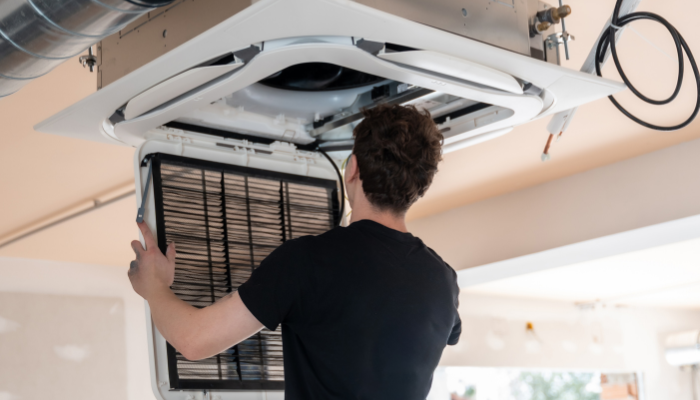
Beyond the install, a ducted system needs a regular service to run efficiently and stay reliable. We recommend a service once a year, or every two years at a minimum, to clean filters and coils, check the refrigerant charge, and keep the system performing. A dirty or neglected system works harder and costs more to run.
At QuickAir, a service is a fixed $259, or $249 for returning customers, and the price is published upfront. A well-maintained ducted system holds its efficiency and lasts longer, which matters more with ducted than with a cheap split because there’s more money invested in the equipment. You can read more about servicing and maintenance and what a service covers.
Is ducted air conditioning cheaper than the alternatives?
Ducted reverse cycle is the most expensive way to cool and heat a home, but it’s also the only one on this list that does both from a single, hidden system. The main lower-cost alternative is ducted evaporative cooling, which works by drawing air through water-soaked pads. The table below compares the two whole-home options.
| System | Typical installed cost (AUD) | Heating and cooling | Best suited to |
| Ducted reverse cycle | $10,000 to $18,000 or more | Heats and cools | Whole-home comfort, consistent temperatures |
| Ducted evaporative cooling | $2,500 to $6,000 | Cooling only | Dry climates, lower upfront budget |
Evaporative cooling is much cheaper to install, but it comes with trade-offs. It only cools, so it does nothing for you in winter, it needs windows left open to work, and it’s less precise than a refrigerated system, especially in humid weather. For a home that wants steady comfort all year from one system, ducted reverse cycle is usually the better long-term fit, which is why it’s the ducted reverse cycle system most families ask us about. If cooling is all you need and you’re in a dry climate, evaporative is worth considering for the lower price.
How to get an accurate ducted air conditioning quote
The prices above are ranges, and the only way to know your number is a proper on-site assessment. A ducted quote depends on your actual roof space, the layout of your home, how many zones you want, and any electrical work needed, none of which can be judged accurately over the phone.
When you compare quotes, make sure each one covers the same thing. A quote should include the unit, all labour, the ductwork and vents, and any electrical or structural work. The cheapest quote is not always the cheapest job if it leaves out the switchboard upgrade or the extra zone you actually wanted. It pays to get a few detailed quotes and confirm exactly what each price covers before you decide. When one of our technicians assesses a home, they look at the roof cavity, the number of rooms and zones, the outdoor unit position, and any electrical work, then give you a fixed written quote so there are no surprises on install day.
Frequently asked questions
How much does ducted air conditioning cost for a 4 bedroom house?
A four bedroom home usually costs between $12,000 and $18,000 or more for a ducted reverse cycle system, especially once zoning is added. The exact figure depends on the layout, whether it’s single or double storey, and how many zones you want.
How much does it cost to run ducted air conditioning per hour?
A typical ducted system costs roughly $3 to $4 per hour to run, which works out to about $250 to $500 a year over a long summer. Running costs rise with lower temperature settings, poorer insulation, and older, less efficient units.
Is ducted reverse cycle cheaper than evaporative cooling?
No. Ducted evaporative cooling is much cheaper to install, at around $2,500 to $6,000 compared to $10,000 or more for reverse cycle. The trade-off is that evaporative only cools, needs open windows, and is less effective in humid weather, while reverse cycle heats and cools the whole home precisely.
What size ducted air conditioner do I need?
A ducted system is sized at roughly 120 to 150 watts per square metre of floor area, so a larger home needs a higher-capacity unit. Getting the size right is the single decision that most affects both comfort and running cost, so it’s worth confirming with a proper load calculation rather than a rough guess.
Why do ducted air conditioning quotes vary so much?
Ducted quotes vary because home size, the number of zones, brand, install difficulty, and any electrical work all change the price. Two homes of the same size can differ by thousands once zoning and access are factored in, which is why an on-site assessment gives a far more accurate number than a phone estimate.
Get a fixed quote for your ducted system
Working out a ballpark from the ranges above is a smart first step, but the accurate number for your home comes from an on-site look at your roof space, layout, and zoning. You can book an on-site installation quote for a fixed $149, credited back to you if you go ahead with the install. Our licensed technicians work across every capital city and give you a fixed written quote with no pressure either way, backed by our 100% workmanship guarantee. Get in touch or call us on 1300 730 896.